Air India Flight Cancellations: What the Latest Data Shows About Disruptions, Regulation and Passenger Rights
Air India flight cancellations: verified data, causes and passenger impact
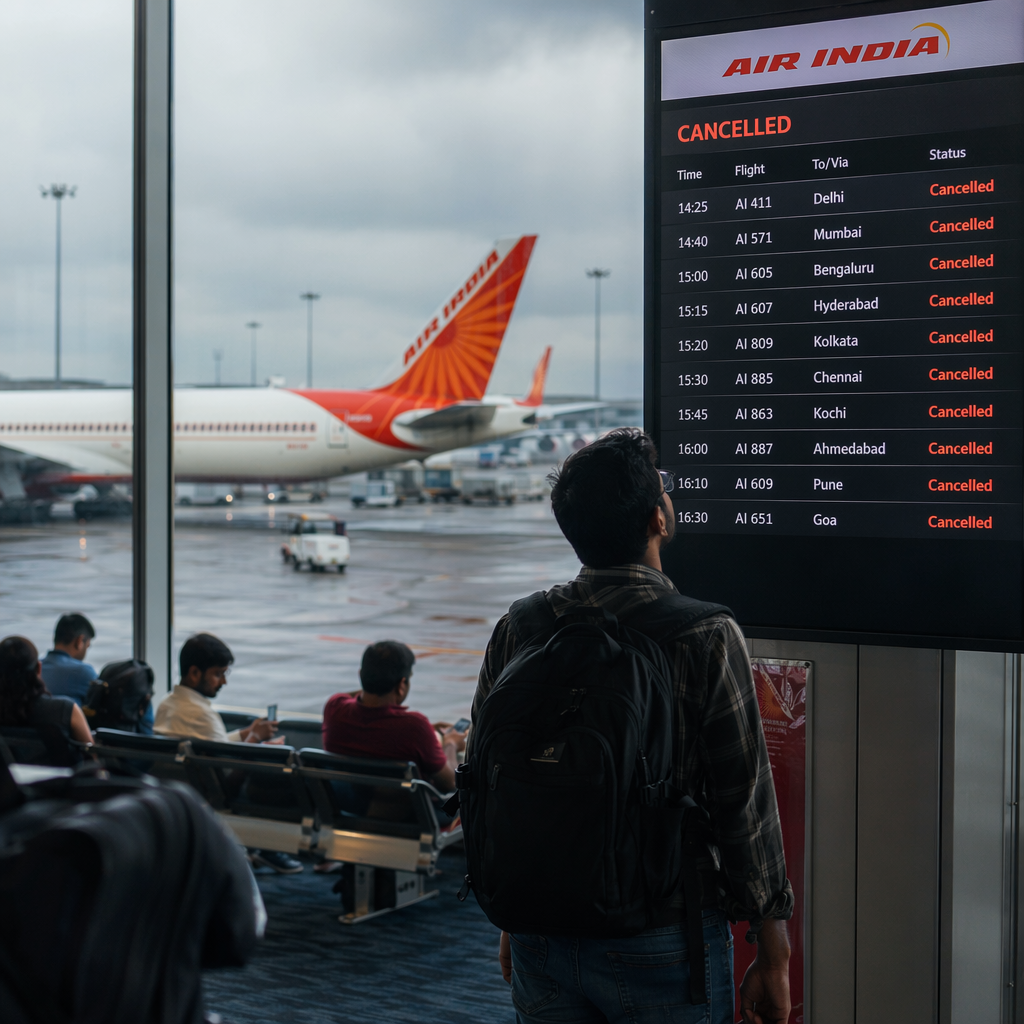
Air India’s flight cancellations have remained a public issue during 2024–2026, a period in which the airline has been expanding its fleet, integrating group carriers and operating under tighter passenger-rights rules issued by India’s aviation regulator. As of 2026, travellers searching for Air India cancelled flights are typically dealing with four practical questions: why the flight was cancelled, whether the cancellation was within the airline’s control, what compensation or refund applies, and how quickly an alternative flight can be arranged.
The issue has also been shaped by India’s wider aviation market. According to India’s Directorate General of Civil Aviation (DGCA), Indian scheduled domestic airlines carried more than 150 million domestic passengers in 2023 and continued to handle heavy traffic through 2024. In a high-volume network, even a small cancellation percentage can affect thousands of passengers in a single month. DGCA’s monthly traffic reports for 2024 continued to publish airline-wise cancellation and passenger complaint data, including figures for Air India and other scheduled carriers.
Reuters reported in 2024 that Air India was in the middle of a major turnaround after its 2022 acquisition by the Tata Group. The process included aircraft orders, refurbishment plans, route changes and the consolidation of airlines within the group. These operational changes coincided with recurring disruptions linked to engineering issues, weather, airspace restrictions, airport congestion and crew-management constraints.
What official rules say when an Air India flight is cancelled
In India, flight cancellations are regulated by the DGCA through Civil Aviation Requirements on facilities to be provided to passengers. The rules require airlines to provide refunds, alternate travel options and, in some cases, compensation depending on the timing and reason for cancellation.
Under DGCA passenger-rights rules, if an airline cancels a flight and informs passengers less than 24 hours before departure, it must offer either an alternative flight or a refund, and compensation may apply unless the cancellation was caused by extraordinary circumstances. These circumstances can include weather, political instability, security risks, air traffic management decisions and other events outside the carrier’s control.
The DGCA has also directed airlines to publish clear passenger information on refunds and compensation. This applies to Air India in the same way as other scheduled carriers operating in India.
As of 2026, passengers affected by Air India cancellations should check the reason stated by the airline, because rights differ between controllable cancellations such as commercial or operational decisions and uncontrollable cancellations such as severe weather or government-imposed restrictions.
Recent operational context: fleet growth and network changes
Air India’s cancellation record cannot be separated from the airline’s restructuring. In February 2023, Air India announced one of the world’s largest aircraft orders: 470 aircraft from Airbus and Boeing. Reuters reported that the order included 250 Airbus aircraft and 220 Boeing aircraft, forming part of the airline’s long-term expansion plan.
By 2024, the airline was still operating a mixed fleet of older and newer aircraft while waiting for deliveries and undertaking cabin refurbishment. Reuters reported that Air India’s transformation included improvements to technology, aircraft interiors and customer-facing systems, but such changes take several years to complete in a large international airline.
The airline group also moved forward with consolidation. Vistara, jointly owned by Tata Sons and Singapore Airlines, was merged into Air India in November 2024 after regulatory approvals. Air India Express and AIX Connect also moved through an integration process. These mergers changed flight numbers, schedules, aircraft allocation and customer-service systems. Such integration periods are commonly associated with schedule adjustments, though each cancellation must be assessed on its stated cause.
2024–2026 statistics relevant to Air India cancellations
Publicly available aviation data from regulators and official releases provide measurable context for Air India flight disruptions. The figures below are not all cancellation counts, but they are directly relevant to the scale of operations, regulatory environment and passenger impact during the 2024–2026 period.
- 2024: DGCA monthly domestic traffic reports showed India’s scheduled domestic airlines carried tens of millions of passengers during the year, with airline-wise cancellation rates and complaints published each month.
- 2024: Reuters reported that Air India was implementing a fleet and service transformation following its 2023 order for 470 aircraft, including 250 Airbus and 220 Boeing planes.
- 2024: The merger of Vistara into Air India was completed in November 2024, creating a larger full-service airline under the Air India brand, according to company and regulatory statements reported by Reuters.
- 2024: DGCA passenger rules required compensation or alternate travel in eligible cancellation cases, while exempting airlines from compensation for extraordinary circumstances such as severe weather and air traffic restrictions.
- 2025: India’s aviation authorities continued publishing monthly domestic passenger, cancellation and complaint data through DGCA traffic reports, maintaining public monitoring of carrier performance.
- As of 2026: Air India remained subject to DGCA refund and compensation rules for cancelled flights departing from Indian airports, including obligations to provide refunds, rebooking options and passenger assistance where applicable.
Why Air India flights are cancelled
Air India cancellations can occur for several documented reasons. Airlines generally categorise disruptions as operational, technical, weather-related, air traffic-related or security-related. The reason matters because passenger compensation depends on whether the cancellation was within the airline’s control.
Technical or engineering issues are among the most common operational reasons across the aviation industry. If an aircraft develops a defect before departure and no replacement aircraft is available, the airline may cancel the service. Such decisions are usually made for safety compliance, and aircraft cannot legally operate unless maintenance standards are met.
Weather disruptions affect Air India flights during fog, storms, low visibility, cyclones and heavy monsoon conditions. North Indian airports, including Delhi, regularly experience winter fog. When visibility falls below safe operating limits, flights may be delayed, diverted or cancelled. In these cases, compensation may not be payable if the situation is classified as beyond the airline’s control.
Air traffic management restrictions can also cause cancellations. Airport congestion, runway closures, military airspace activity or international airspace restrictions can reduce available flight slots. International flights may be affected when routes require longer diversions, crew duty limits are reached or airport curfews apply.
Crew availability and duty-time limits are another factor. Airlines must comply with flight duty time limitations set by regulators. If a delay causes pilots or cabin crew to exceed legal duty hours, the airline may need replacement crew. If replacements are not available, the flight can be cancelled.
Passenger rights: refund, rebooking and compensation
For passengers, the most important document is the DGCA’s Civil Aviation Requirement on denied boarding, cancellations and delays. The rules require airlines to offer certain facilities when cancellations occur. Air India publishes related policies on its customer-support and conditions-of-carriage pages, but the DGCA framework sets the regulatory baseline.
If Air India cancels a flight, passengers are generally entitled to either a refund or an alternative flight, subject to the applicable rules and fare conditions. If the cancellation is notified less than 24 hours before departure and the passenger has not been provided an alternate flight acceptable to them, compensation may apply unless the airline proves that extraordinary circumstances caused the cancellation.
Refunds must be processed according to the original mode of payment and applicable aviation rules. In India, airlines are expected to refund statutory taxes, user development fees and airport charges where applicable when a passenger does not travel. The exact refund amount can depend on whether the ticket was refundable, non-refundable, purchased through an agent or purchased directly from the airline.
Passengers should keep the following records after a cancelled Air India flight: booking reference, ticket number, cancellation message, boarding pass if issued, payment receipt, and any written communication from the airline or travel agent. These documents are useful if a refund or compensation claim is disputed.
Domestic versus international cancellations
Domestic and international cancellations are handled under different operational pressures, although Indian passenger-rights rules apply to flights departing from India. Domestic cancellations may be resolved more quickly if the airline can place passengers on another same-day service within India. However, seat availability depends on route frequency and demand.
International cancellations can be more complex. Rebooking may involve immigration rules, transit visa requirements, airport curfews, long-haul aircraft availability and partner-airline capacity. A passenger travelling from India to Europe, North America, the Gulf or Southeast Asia may be affected by onward connections, hotel bookings and visa validity.
Air India is a member of Star Alliance, which may help with some international re-accommodation options, but availability is not automatic. Passengers should request written confirmation of any new routing, especially if a cancellation changes the arrival date or connecting airport.
How regulators monitor cancellations
The DGCA publishes monthly domestic traffic data that includes airline-wise performance indicators. These reports have included passenger numbers, market share, load factors, cancellation rates and complaint categories. For travellers, these reports are among the most reliable public sources for checking airline performance because they are issued by the national aviation regulator.
Government monitoring became more important as Indian air travel expanded. Large passenger volumes mean that cancellations can have a wider effect on airport operations, ground staff, baggage handling and connecting passengers. The Ministry of Civil Aviation also periodically issues public statements on congestion, passenger facilities and airline compliance.
Reuters and other news agencies have reported on Air India’s transformation since the Tata takeover, including aircraft orders, management changes and service upgrades. These reports provide context, but official cancellation rights are determined by government rules rather than company announcements.
What passengers should do when an Air India flight is cancelled
When a cancellation notice arrives, the first step is to confirm the flight status through Air India’s official website, mobile app or airport counter. Passengers should avoid relying only on third-party messages because flight status can change quickly during weather or air traffic disruptions.
The second step is to ask whether the airline is offering a confirmed alternative flight. If the alternative is not suitable, the passenger can ask for a refund under the applicable rules. For international travel, passengers should also check whether the new routing affects visa, hotel, airport transfer or onward-flight arrangements.
If the cancellation occurs at the airport, passengers should request written information on meals, accommodation or transport where applicable. Under DGCA rules, facilities may be required depending on waiting time, timing of the next flight and the cause of disruption.
Passengers who do not receive a satisfactory response can escalate the complaint to Air India customer support and then to the AirSewa portal operated under India’s Ministry of Civil Aviation. The complaint should include ticket details, cancellation evidence and the specific remedy requested.
Key facts for travellers as of 2026
As of 2026, Air India cancellations are governed by the same core regulatory principles as other Indian scheduled airlines: safety decisions take priority, extraordinary circumstances can limit compensation, and passengers retain rights to refunds or alternate travel in eligible cases.
For travellers, the most reliable approach is to separate three issues: the operational reason for cancellation, the airline’s immediate rebooking offer, and the legal entitlement under DGCA rules. A cancellation caused by a technical issue may be treated differently from one caused by fog or air traffic restrictions. A cancellation notified days in advance may also be treated differently from one announced shortly before departure.
Air India’s ongoing fleet expansion, network consolidation and integration of former group airlines have made the carrier larger and more complex than it was before the Tata acquisition. At the same time, official DGCA data and passenger-rights rules provide a public framework for tracking cancellations and claiming remedies.
The practical test for every cancelled Air India flight remains evidence-based: the stated cause, the timing of notice, the passenger’s ticket conditions and the assistance actually provided. These details determine whether the passenger receives only a refund or rebooking, or whether additional compensation may be payable under Indian aviation rules.
Sources: Reuters, Government releases, publicly available data.
Comments
Post a Comment