2026 West Bengal Assembly Election: What the Data Shows
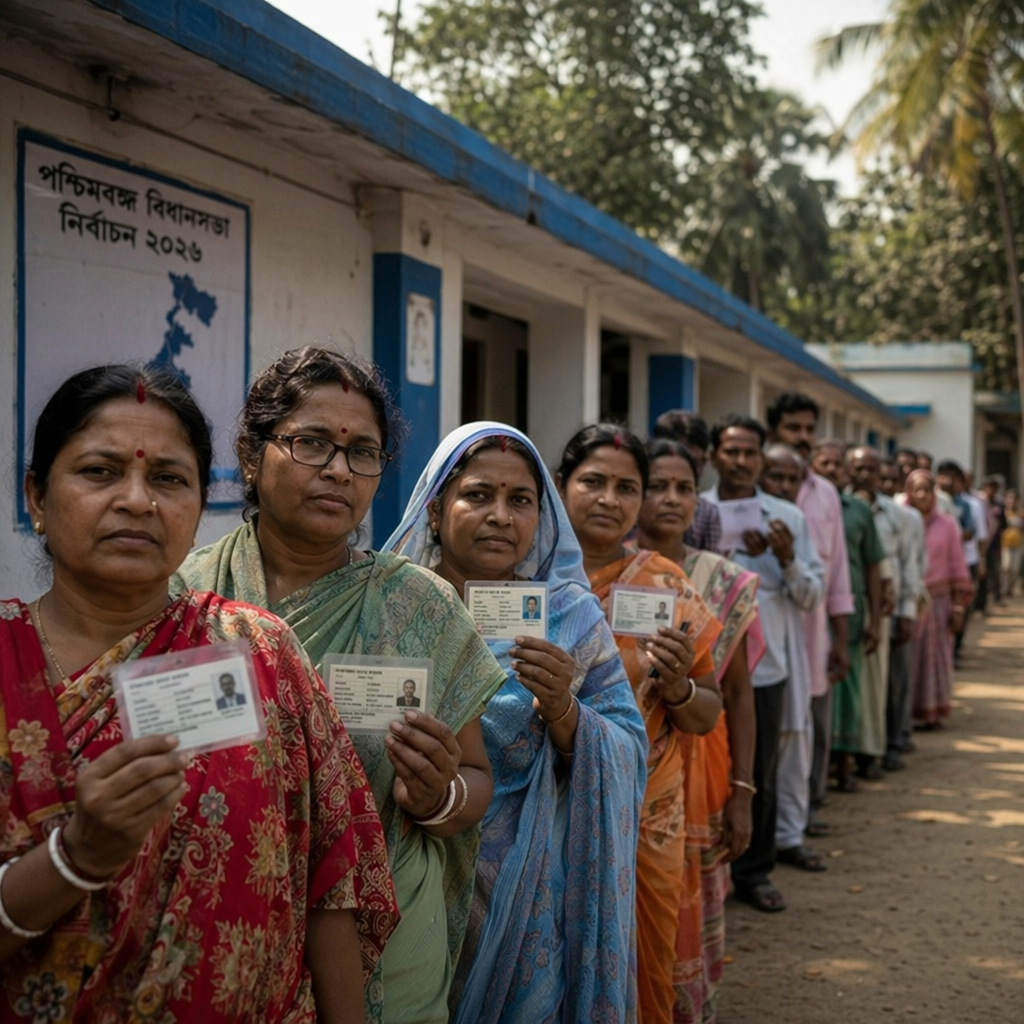
West Bengal is scheduled to elect a 294-member Legislative Assembly in 2026, making it one of India’s largest state-level electoral contests by number of constituencies and voters. In the 2024 Lok Sabha election, the Election Commission of India recorded more than 7.6 crore registered electors in West Bengal, placing the state among the country’s major electoral battlegrounds.
The 2026 Bengal Assembly election will decide the next government in Kolkata after the term of the current Legislative Assembly ends in 2026. As of 2026, the contest is expected to be shaped by the performance of the ruling All India Trinamool Congress, the Bharatiya Janata Party’s position as the main opposition force, and the role of the Left-Congress bloc in selected regions. The election will be conducted by the Election Commission of India under the constitutional framework governing state assemblies.
Assembly Size and Election Schedule Framework
West Bengal has 294 Assembly constituencies, according to the Election Commission of India. A party or alliance requires 148 seats to secure a simple majority in the Assembly. The previous Assembly election was held in eight phases in 2021, with results declared on 2 May 2021.
The five-year term of the current Assembly runs until 2026, unless it is dissolved earlier. As of 2026, the official election schedule, including polling dates, nomination deadlines and counting day, must be notified by the Election Commission of India. Under Indian election law, the Commission announces the detailed programme through a formal press release and gazette notification.
In 2021, the Trinamool Congress won 213 of 294 seats, according to the Election Commission of India’s published results. The Bharatiya Janata Party won 77 seats, emerging as the largest opposition party in the Assembly. The Sanjukta Morcha, which included the Left Front and Congress, did not win any seat in that election. These numbers remain central to understanding the political baseline ahead of 2026.
2024 Lok Sabha Results: The Latest Statewide Electoral Indicator
The most recent statewide electoral test before the 2026 Assembly election was the 2024 Lok Sabha election. According to the Election Commission of India’s 2024 results, West Bengal has 42 parliamentary constituencies. The Trinamool Congress won 29 seats, the Bharatiya Janata Party won 12 seats, and the Indian National Congress won 1 seat.
In vote share terms, the Election Commission of India’s 2024 results showed the Trinamool Congress at about 45.76% of votes polled in West Bengal and the BJP at about 38.73%. Congress polled about 4.68%, while the Communist Party of India (Marxist) polled about 5.67%. These figures are not Assembly seat projections, but they are the most recent official statewide voting data before the 2026 contest.
Reuters reported in June 2024 that the Trinamool Congress improved its parliamentary tally in West Bengal compared with the 2019 general election, while the BJP’s seat count in the state fell from its 2019 level. The Reuters reporting aligned with the Election Commission’s official seat results released after counting.
Electorate Size and Poll Management
As of the 2024 general election, West Bengal had more than 7.6 crore electors, according to Election Commission data released for the Lok Sabha polls. The exact 2026 voter list will be based on the final electoral roll published by the Election Commission after summary revision.
Election management in West Bengal is typically complex because of the size of the electorate, the number of booths, security deployment requirements and the state’s border geography. West Bengal shares international borders with Bangladesh, Bhutan and Nepal, and internal borders with several Indian states. Security planning is therefore coordinated between the Election Commission, the state administration and central forces, depending on the Commission’s assessment.
The 2021 Assembly election was conducted in multiple phases. The Election Commission said at the time that phased polling was used to support logistics and security arrangements. Any decision on the number of phases in 2026 will be announced only by the Commission.
Key Verified Numbers Before the 2026 Election
- 294 Assembly seats: West Bengal’s Legislative Assembly strength, as listed by the Election Commission of India.
- 148 seats for majority: The minimum number required to form a government in the 294-member Assembly.
- 213 seats in 2021: Trinamool Congress tally in the last Assembly election, according to Election Commission results.
- 77 seats in 2021: BJP tally in the last Assembly election, making it the principal opposition party.
- 42 Lok Sabha seats in 2024: West Bengal’s parliamentary strength in the general election.
- 29 Lok Sabha seats in 2024: Trinamool Congress tally in West Bengal in the 2024 general election, according to official results.
Main Political Parties and Recent Performance
The All India Trinamool Congress has governed West Bengal since 2011. Mamata Banerjee has served as chief minister since that year. In the 2021 Assembly election, the party returned to power for a third consecutive term with a large majority.
The Bharatiya Janata Party became the main opposition force in the state Assembly after its 2021 performance. Its rise was preceded by the 2019 Lok Sabha election, when it won 18 of 42 parliamentary seats in West Bengal, according to the Election Commission. In 2024, it won 12 parliamentary seats in the state.
The Left Front, led by the Communist Party of India (Marxist), governed West Bengal from 1977 to 2011. It did not win an Assembly seat in 2021, but it retained vote share pockets in some districts and contested the 2024 Lok Sabha election as part of opposition arrangements in several seats. The Congress, which won 1 Lok Sabha seat in West Bengal in 2024, has historically held influence in districts such as Murshidabad and Malda.
As of 2026, the official candidate lists, alliances and seat-sharing arrangements will depend on announcements made by parties after the Election Commission’s schedule is issued or in the months preceding it. Verified information on candidates must come from party releases and official nomination filings.
Issues Likely to Be Measured Through Public Data
Election campaigns usually focus on governance, welfare delivery, employment, prices, law and order, infrastructure, rural development and identity-related issues. However, the verifiable basis for assessing these subjects comes from official datasets and government releases.
For example, under the National Food Security Act, the Department of Food and Public Distribution publishes foodgrain allocation data for states, including West Bengal. The Reserve Bank of India and state budget documents provide figures on state finances, debt, spending priorities and revenue. The Ministry of Statistics and Programme Implementation and state economic reviews provide data on output, inflation-related indicators and employment surveys.
West Bengal’s economy includes agriculture, services, small industries, ports, tea, jute, tourism and urban commerce. Kolkata remains the state’s largest urban centre and administrative capital. District-level voting patterns in 2026 may be analysed after polling using constituency-wise data published by the Election Commission.
Women Voters and Welfare Politics
Women voters are an important part of West Bengal’s electorate. The Election Commission’s final rolls for each election list the number of male, female and third-gender electors. In recent elections, parties have paid attention to women-focused welfare schemes, including direct benefit programmes and social support initiatives.
The West Bengal government’s Lakshmir Bhandar scheme has been repeatedly cited in official state communications as a major direct support programme for women. Any updated beneficiary count for 2026 should be taken from state government budget documents or department releases. Election coverage should distinguish between official beneficiary data and campaign claims.
In 2024, women’s participation was also monitored nationally by the Election Commission during the Lok Sabha election. The Commission’s turnout releases provide gender-wise polling figures after each election. For the 2026 Assembly election, final gender-wise turnout will be available only after polling and counting are completed.
Minority Voters and Regional Patterns
West Bengal has significant religious and linguistic diversity. According to the 2011 Census of India, Muslims accounted for about 27% of the state’s population. The 2011 Census remains the latest completed official census available as of 2026 unless new census results are published by the Government of India.
Districts such as Murshidabad, Malda, Uttar Dinajpur and parts of South 24 Parganas have higher minority population shares than the state average, according to census tables. Political parties often campaign differently across these regions, but the measurable outcome will be available through booth-level and constituency-level results released by the Election Commission.
North Bengal, South Bengal, Kolkata, the industrial belt, the Jangalmahal region and the border districts have shown different voting patterns across elections. In 2024, the BJP retained several seats in North Bengal, while the Trinamool Congress performed strongly across much of South Bengal, according to the Election Commission’s parliamentary results.
Role of the Election Commission
The Election Commission of India is responsible for the conduct of Assembly elections under the Constitution and the Representation of the People Acts. Its duties include publishing electoral rolls, registering candidates, allotting symbols, enforcing the Model Code of Conduct, appointing observers and supervising counting.
Once the 2026 schedule is announced, the Model Code of Conduct will apply to the state government, political parties and candidates. The Commission generally issues instructions on campaign spending, rallies, advertisements, social media use and law-and-order coordination.
Candidate affidavits will be published on official election platforms after nominations. These affidavits include declared assets, liabilities, educational qualifications and criminal cases, where applicable. The Association for Democratic Reforms often analyses these affidavits, but the primary legal documents are those filed with the Election Commission.
What to Watch When Official Data Arrives
As of 2026, the most important verified updates will come in stages. First, the Election Commission will publish the final electoral roll, confirming the number of voters. Second, it will announce the election schedule and phases. Third, parties will release candidate lists and alliances. Fourth, after nominations close, official candidate affidavits will show constituency-level details. Finally, the Commission will release turnout and result data.
For voters and observers, the most reliable indicators will be official turnout, constituency margins, party vote share and seat conversion. In a 294-seat Assembly, even small changes in vote share can produce large seat changes depending on regional concentration. This pattern has been visible in West Bengal’s past elections, including 2019, 2021 and 2024, as shown in Election Commission data.
The 2026 Bengal Assembly election will therefore be assessed through a combination of historical Assembly results, the 2024 Lok Sabha outcome, updated voter lists, welfare and economic data, and the final constituency-wise results. Until the Election Commission releases the official schedule and rolls, all dates and voter totals for the 2026 election remain subject to official notification.
Sources: Reuters, Government releases, publicly available data.
Comments
Post a Comment