Gold and Silver Rates: What 2024–2026 Data Shows About सोना चांदी का भाव
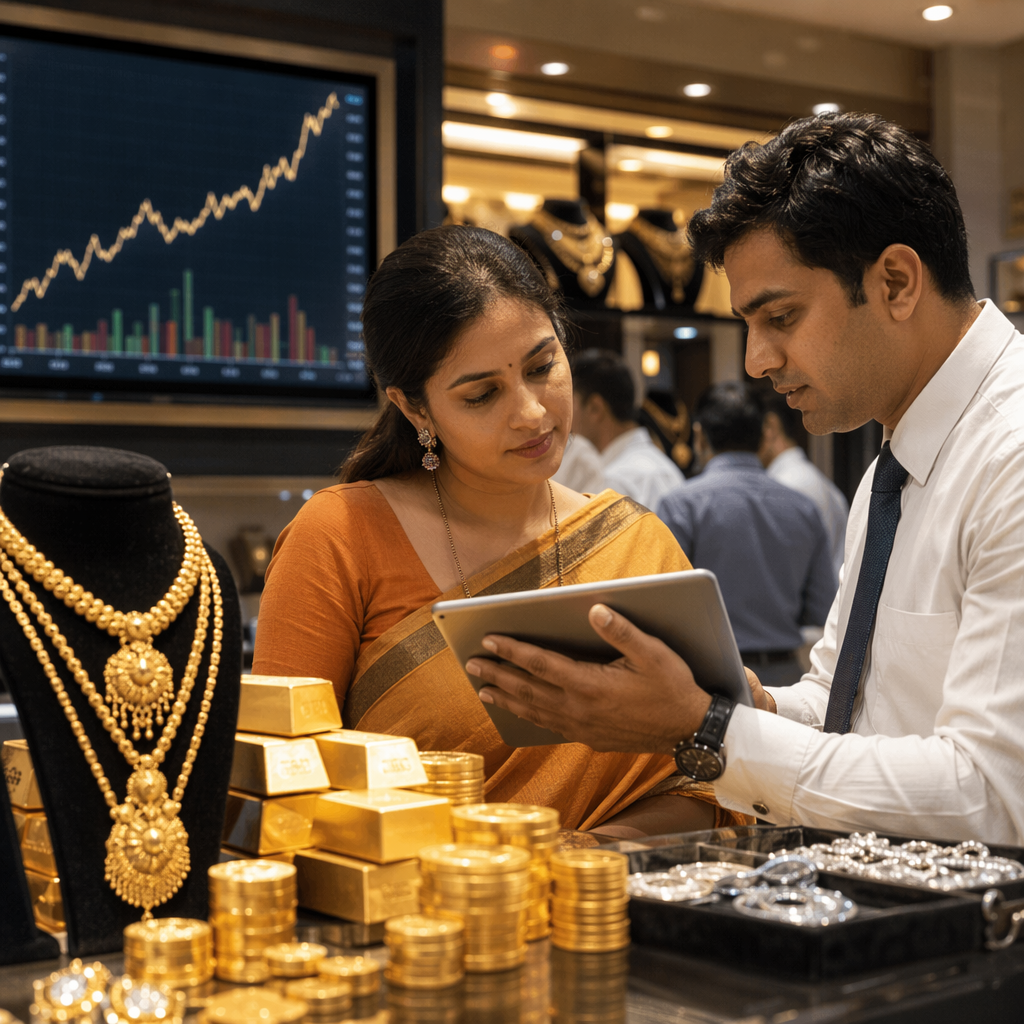
As of 2026, gold and silver prices remain closely tracked by households, jewellers, investors and policymakers in India because the two metals are linked to imports, inflation expectations, currency movement and global commodity markets. In India, सोना चांदी का भाव is not only a retail jewellery concern; it is also connected with the country’s external trade and household savings.
India is one of the world’s largest gold-consuming markets, and domestic prices are influenced by international spot prices, the rupee-dollar exchange rate, customs duties, GST, transport costs and local demand. Silver, meanwhile, has both investment and industrial use, including in solar panels, electronics and electrical applications. This dual role makes silver prices sensitive to both precious-metal demand and industrial cycles.
According to publicly available market reporting by Reuters, international gold prices reached record highs during 2024 as investors followed expectations around U.S. interest rates, central-bank buying and geopolitical risk. In 2024, gold crossed the widely reported level of $2,400 per troy ounce in international markets. Silver also moved sharply in 2024, with spot silver rising above $30 per troy ounce during the year, according to Reuters market reports.
How सोना चांदी का भाव Is Determined in India
Gold and silver rates in India are formed through a combination of global and domestic factors. Internationally, both metals are quoted in U.S. dollars per troy ounce. Indian retail prices are then affected by the rupee-dollar exchange rate and import costs. Since India imports a large share of its gold requirement, a weaker rupee can raise domestic gold prices even if international prices remain unchanged.
For consumers, the quoted rate at a local jeweller is usually not the final payable price. Jewellery buyers also pay making charges, Goods and Services Tax and, in many cases, hallmarking-related charges. Investment products such as coins, bars, exchange-traded funds and sovereign gold bonds have different pricing mechanisms.
The Government of India and the Reserve Bank of India have also influenced the gold market through policy. The customs duty structure, import rules and gold bond schemes affect how people buy or hold gold. For silver, industrial demand and imported supply are important factors, while retail demand rises during festivals and wedding seasons.
Key Price and Market Statistics, 2024–2026
Market data from 2024 to 2026 shows that precious metals entered a period of high attention from investors and consumers. The following factual indicators help explain why सोना चांदी का भाव has been widely followed:
- 2024: Reuters reported that international gold prices crossed $2,400 per ounce during the year, supported by safe-haven demand and expectations of U.S. monetary policy changes.
- 2024: Spot silver traded above $30 per ounce, according to Reuters market updates, reflecting both investment demand and industrial-use expectations.
- 2024: India’s Union Budget cut the basic customs duty on gold and silver, reducing the overall duty burden on these metals. The Government of India announced duty changes in July 2024 as part of Budget documents.
- 2024: The Reserve Bank of India stated that India’s foreign exchange reserves included gold holdings, and RBI data showed continued reporting of gold as a component of official reserves.
- 2025: Reuters reported that gold remained supported by central-bank purchases, geopolitical risk and expectations around global interest-rate policy.
- As of 2026: gold and silver continue to be priced in India on the basis of international bullion benchmarks, currency movement, taxes and local market premiums.
Gold Rates in India: Why Domestic Prices Can Differ From Global Prices
When global gold rises, Indian prices often rise too, but not always at the same pace. The reason is the rupee-dollar exchange rate. Gold is internationally priced in dollars. If the rupee weakens against the dollar, Indian importers pay more rupees for the same quantity of gold. This can lift domestic prices even when the dollar price of gold is stable.
Taxes are another major component. Gold imports into India have historically attracted customs duty, agriculture infrastructure and development cess, and GST at the retail stage. The exact payable price for consumers depends on the form of purchase. Jewellery purchases include making charges and GST on the final bill. Bullion purchases are closer to metal value but still include taxes, dealer margins and logistics costs.
In July 2024, the Government of India announced a cut in customs duty on gold and silver in the Union Budget. Government budget documents stated that the basic customs duty on gold and silver was reduced. This policy move was widely reported by Reuters and Indian financial media because it directly affected landed costs and official import channels.
The impact of duty changes can be visible in local rates, but prices also depend on international movement. If global bullion prices rise sharply, a duty cut may only partly offset the increase for retail buyers. Conversely, when global prices soften, duty cuts can accelerate a decline in local rates.
Silver Rates: Investment Metal and Industrial Commodity
Silver differs from gold because it has a larger industrial demand component. It is used in solar photovoltaic cells, electronics, brazing alloys, medical applications and electrical contacts. This means that silver prices can respond to industrial demand trends in addition to investment demand.
In 2024, Reuters reported that silver prices moved above $30 per ounce. The rise was linked in market coverage to broader precious-metal strength and expectations of industrial demand. Silver is often more volatile than gold because its market size is smaller and industrial demand can change with economic cycles.
In India, silver is bought in the form of jewellery, anklets, coins, utensils, bars and industrial inputs. Rural demand, festival purchases and wedding seasons can affect local premiums. Compared with gold, silver has lower value density, which means storage and transport costs are relatively more important for large quantities.
For consumers checking आज का सोना चांदी का भाव, it is important to distinguish between spot market prices, wholesale bullion prices and retail jewellery rates. A quoted silver rate per kilogram may not match the final price of a silver article because purity, making charges and GST are added.
Role of Central Banks and Interest Rates
Gold is often influenced by central-bank reserves and global interest-rate expectations. Central banks hold gold as part of official reserves. The World Gold Council has reported strong central-bank gold buying in recent years, including the period after 2022. Reuters market reports in 2024 and 2025 frequently cited central-bank buying as one of the factors supporting global gold prices.
Interest rates matter because gold does not pay interest. When real yields fall or investors expect lower policy rates, gold can become relatively more attractive. When rates rise, interest-bearing assets may compete with gold. This relationship is not automatic, but it is a widely tracked factor in bullion markets.
The U.S. Federal Reserve’s policy stance is especially important because gold is priced in dollars globally. A stronger dollar can make gold more expensive for holders of other currencies, while a weaker dollar can support demand. Indian gold rates therefore reflect both international gold prices and currency conversion into rupees.
Government Data and India’s Gold Market
Government data helps explain why gold prices matter for India’s economy. Gold imports affect the trade balance because India buys much of its gold from abroad. Higher import volumes or higher international prices can widen the import bill. The Ministry of Commerce and Industry publishes trade data that includes gold and silver imports under commodity categories.
The Reserve Bank of India publishes information on foreign exchange reserves, including gold. RBI weekly statistical supplements list foreign currency assets, gold, Special Drawing Rights and reserve position in the International Monetary Fund. These releases are among the official sources used to track India’s reserve position.
For consumers, the Bureau of Indian Standards is also relevant. BIS hallmarking is used to certify the purity of gold jewellery. The Government of India has expanded mandatory hallmarking in phases. Hallmarking does not set the price of gold, but it helps identify purity, which is essential because the price differs for 24-carat, 22-carat and 18-carat gold.
As of 2026, the common retail categories in India remain 24-carat gold, 22-carat gold and 18-carat gold. The purest commercial bullion is usually quoted as 24-carat or 999 purity. Jewellery is often made in 22-carat or 18-carat because pure gold is softer and less suitable for daily-wear ornaments.
Why Rates Differ Across Indian Cities
Gold and silver rates are not identical across all Indian cities. Local rates can vary because of transport costs, local association pricing, demand conditions, availability of stock and dealer margins. Large trading centres may have tighter spreads, while smaller markets may include higher logistics costs.
Cities such as Mumbai, Delhi, Chennai, Kolkata, Ahmedabad, Jaipur and Hyderabad are major bullion or jewellery markets. Local jeweller associations and bullion dealers update indicative rates during trading hours. However, the final consumer price depends on purity, weight, design, making charges and taxes.
For example, a 22-carat necklace and a 24-carat coin cannot be compared only by weight. The purity differs. A buyer must check the carat value, net gold weight, stone weight, making charge, GST and hallmark details. In silver, purity markings and weight are equally important because articles may include design work or non-silver components.
Gold and Silver in 2024–2026: Main Factors to Watch
The movement of सोना चांदी का भाव during 2024, 2025 and 2026 has been shaped by several documented factors. Reuters market reports repeatedly highlighted U.S. interest-rate expectations, central-bank demand, geopolitical developments and dollar movement as drivers for gold. Silver, in addition, responded to industrial-demand expectations and precious-metal sentiment.
India-specific factors include import duty changes, the rupee exchange rate and festival demand. The July 2024 duty reduction by the Government of India was one of the most important policy changes for the domestic bullion market during this period. Any future change in duty, GST or import policy would also be relevant to local rates.
Consumers should note that real-time rates can change several times in a day. International markets trade almost continuously across time zones, while Indian retail quotations are updated by local dealers and platforms. A rate seen online in the morning may differ from the rate billed by a jeweller later in the day.
How to Read Today’s सोना चांदी का भाव Correctly
When checking today’s gold and silver rate, the first step is to identify the unit. Gold may be quoted per gram, per 10 grams or per troy ounce internationally. Silver may be quoted per gram, per 100 grams, per kilogram or per troy ounce. Confusing these units can lead to incorrect comparisons.
The second step is to check purity. Gold prices for 24-carat, 22-carat and 18-carat are different. Silver may be quoted in 999 purity or lower purities depending on the product. Hallmarking and purity certification are important for resale value.
The third step is to separate metal value from additional charges. Jewellery bills include making charges and GST. Some jewellers charge making fees as a percentage of the gold value, while others charge a fixed amount per gram. Stone-studded jewellery requires extra caution because the stone weight may be included in gross weight but does not carry the same resale value as gold.
For investment buyers, bullion bars, coins, gold ETFs and sovereign gold bonds have different costs and liquidity conditions. Sovereign Gold Bonds are issued by the Government of India through the Reserve Bank of India when subscription windows are open. Gold ETFs are traded on stock exchanges and track domestic gold prices after expenses.
2026 Context: What Remains Factually Clear
As of 2026, the factual position is that gold and silver remain globally traded commodities whose Indian prices are shaped by international benchmarks, rupee-dollar conversion, duties, taxes and local premiums. Gold’s role is primarily as a store of value, jewellery metal and reserve asset. Silver’s role combines jewellery, investment and industrial use.
The 2024–2026 period has already shown that policy changes and international price movement can quickly affect सोना चांदी का भाव. Reuters reported record or near-record gold movements in 2024, silver crossed important market levels during the same year, and the Government of India changed duty rates in July 2024. RBI and government releases continue to provide official information on reserves, imports and regulatory frameworks.
For any purchase, the most reliable approach is to verify the latest local rate, purity, weight, tax, hallmark and invoice details before payment. The headline rate is only one part of the final price paid by a buyer.
Sources: Reuters, Government releases, publicly available data.
Comments
Post a Comment