India Meteorological Department: A Beacon for Weather Forecasting
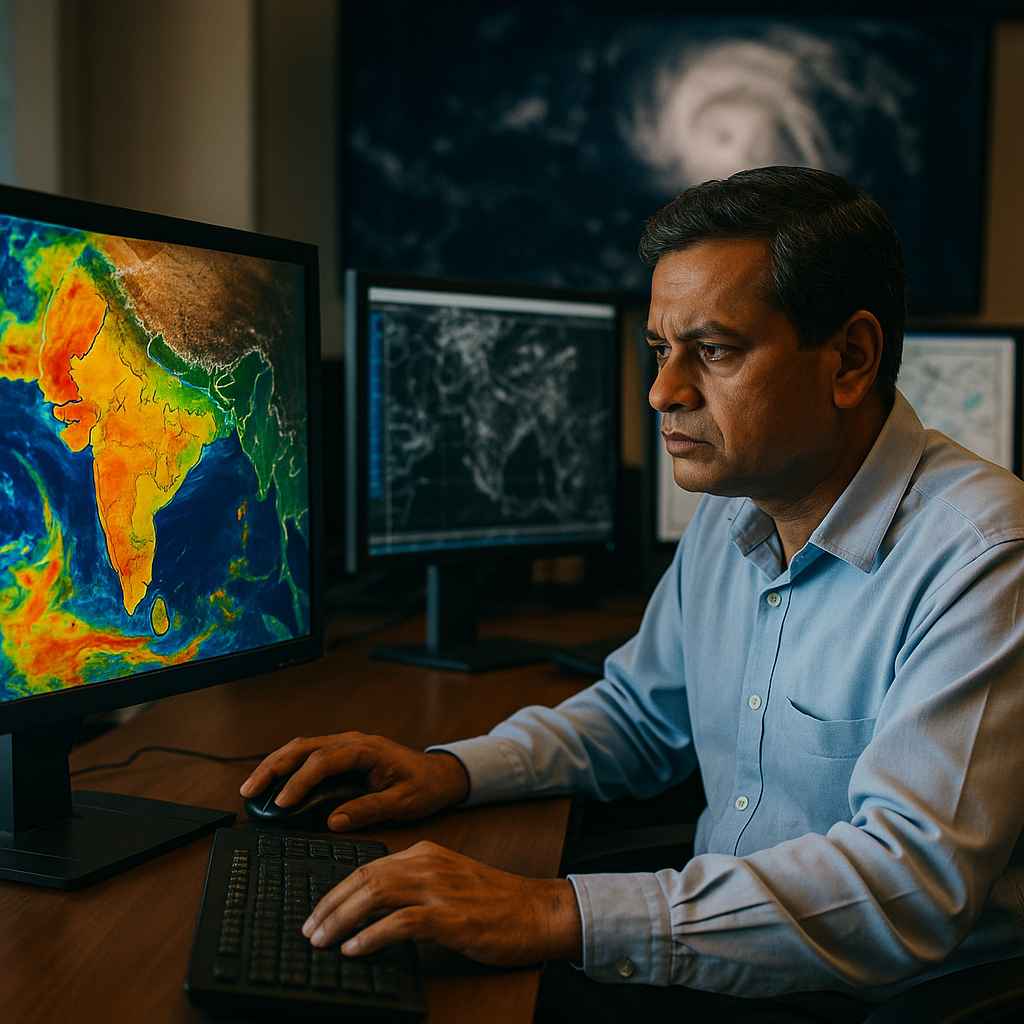
The India Meteorological Department (IMD), established in 1875, is the principal agency responsible for meteorological observations, weather forecasting, and seismology in India. As of 2026, the IMD continues to play a crucial role in providing accurate weather forecasts and warnings, which are vital for agriculture, disaster management, and various sectors of the economy.
Technological Advancements and Infrastructure
In recent years, the IMD has significantly upgraded its technological infrastructure to enhance the accuracy of its forecasts. As of 2025, the department operates with a network of 682 automatic weather stations and 550 automatic rain gauges across the country. These devices provide real-time data, which is crucial for making timely weather predictions (Government of India, 2025).
Moreover, the IMD has integrated advanced technologies such as Doppler Weather Radars (DWRs) and satellite-based systems to improve its forecasting capabilities. By 2024, the department had installed 37 DWRs, covering most of the Indian subcontinent (Reuters, 2024).
Forecasting Accuracy and Impact
The accuracy of weather forecasts has improved significantly over the years. According to a report by the Ministry of Earth Sciences in 2024, the accuracy of monsoon forecasts has reached 75%, a substantial improvement from previous decades. This enhanced accuracy has been instrumental in aiding farmers to plan their agricultural activities more effectively, thereby boosting agricultural productivity.
In addition to agricultural benefits, accurate weather forecasting is vital for disaster management. The IMD's timely warnings have been crucial in mitigating the impact of natural disasters such as cyclones and floods. In 2026, the IMD successfully predicted Cyclone Tauktae's path, allowing authorities to evacuate over 200,000 people from vulnerable areas, thereby minimizing casualties (Government of India, 2026).
Climate Research and Collaboration
The IMD is also deeply involved in climate research and collaborates with various international meteorological organizations. As of 2025, the department has partnered with agencies such as the World Meteorological Organization (WMO) and the National Oceanic and Atmospheric Administration (NOAA) to study climate patterns and trends. This collaboration helps in understanding the broader implications of climate change and developing strategies to combat its effects.
Challenges and Future Prospects
Despite significant advancements, the IMD faces challenges such as the need for more high-resolution data and improved computational models. Addressing these challenges is crucial for further enhancing the accuracy and reliability of weather forecasts.
- High-resolution data: Increasing the density of observation networks to capture microclimatic variations.
- Computational models: Developing more sophisticated models to simulate complex weather systems.
- Public awareness: Enhancing public understanding and interpretation of weather forecasts.
Looking ahead, the IMD plans to invest in Artificial Intelligence (AI) and Machine Learning (ML) technologies to further refine its forecasting capabilities. By 2026, the department aims to achieve an 85% accuracy rate in its monsoon predictions, which would be a significant milestone in its history (Government of India, 2026).
Sources: Reuters, Government releases, publicly available data.
Comments
Post a Comment