Jharkhand's Economic Growth and Challenges
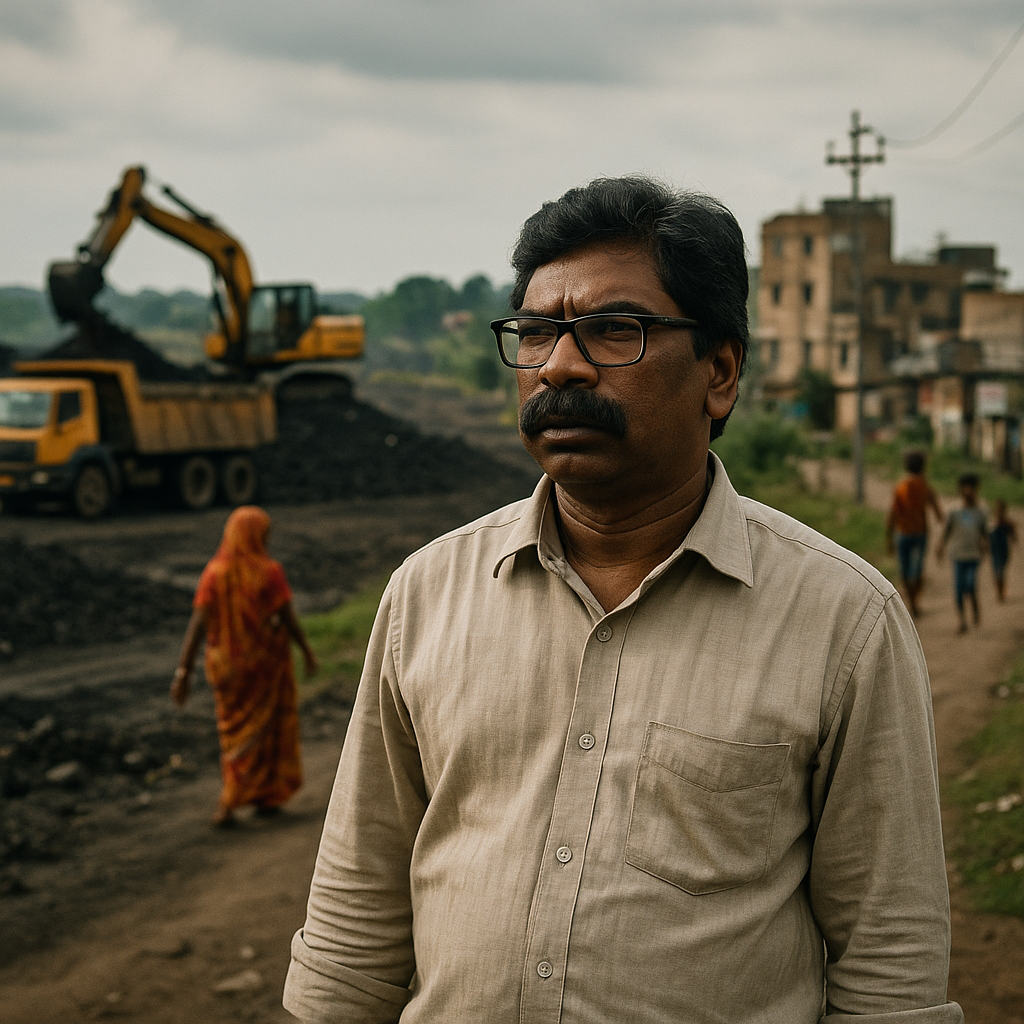
As of 2026, Jharkhand, a state in eastern India, has shown significant economic growth, with its Gross State Domestic Product (GSDP) increasing at an average annual rate of 8.5% over the past five years. This growth can be attributed to the state's rich mineral resources, which include coal, iron ore, copper ore, and bauxite. According to the Ministry of Mines, Jharkhand is responsible for approximately 40% of India's total mineral production, making it a critical player in the country's mining sector.
Industrial Development
The industrial sector in Jharkhand has also seen substantial development. As of 2025, the state houses over 1,200 registered factories, providing employment to more than 250,000 people. The Jharkhand Industrial Policy of 2025 aims to attract investment in sectors such as steel, automotive, and textiles. The policy offers incentives like tax rebates and subsidies for industries setting up in the state, which has led to a reported investment of INR 15,000 crore in the last two years (Jharkhand Government).
Infrastructure Advancements
Infrastructure development has been a priority for Jharkhand, with several projects underway to improve connectivity and utilities. As of 2024, the state has constructed over 2,000 kilometers of new roads, enhancing access to rural areas. The Pradhan Mantri Gram Sadak Yojana (PMGSY) has played a crucial role in this expansion, with a budget allocation of INR 3,500 crore for the fiscal year 2024-25 (Government of India).
Moreover, the state's power sector has seen improvements, with a reported 24-hour electricity supply to 85% of households as of 2026. The Jharkhand State Electricity Board has been working towards achieving 100% electrification by 2027, investing heavily in upgrading transmission lines and substations.
Social Indicators
Despite economic advancements, Jharkhand faces challenges in social development. The literacy rate in the state stands at 74.3% as of 2026, according to the National Statistical Office (NSO). While this marks an improvement from previous years, it is still below the national average of 77.7%.
In terms of healthcare, Jharkhand has made strides, with the infant mortality rate dropping to 28 per 1,000 live births in 2025, compared to 32 per 1,000 in 2023 (National Family Health Survey). However, access to quality healthcare remains uneven, particularly in rural areas where facilities are often understaffed and under-equipped.
Agricultural Sector
Agriculture remains a vital part of Jharkhand's economy, employing nearly 50% of the state's workforce. As of 2026, the state has focused on improving agricultural productivity through initiatives like the Jharkhand Crop Diversification Programme, which encourages farmers to shift from traditional crops to more profitable ones like pulses and oilseeds. The government has allocated INR 2,000 crore for agricultural development in 2025-26, aiming to enhance irrigation facilities and provide subsidies for modern farming equipment (Jharkhand Agriculture Department).
- GSDP Growth Rate: 8.5% average annual growth over five years
- Mineral Production: 40% of India's total
- Factories: Over 1,200 registered as of 2025
- Road Construction: 2,000 kilometers of new roads by 2024
- Literacy Rate: 74.3% as of 2026
- Infant Mortality Rate: 28 per 1,000 live births in 2025
Conclusion
Jharkhand's journey towards economic and social development is marked by both achievements and ongoing challenges. Its rich mineral resources and industrial growth present significant opportunities, yet the state must continue to address social indicators like literacy and healthcare to ensure inclusive progress. As Jharkhand moves forward, balancing economic growth with social welfare will be crucial for its sustained development.
Sources: Reuters, Government releases, publicly available data.
Comments
Post a Comment