Preity Zinta and Arjun Rampal: A Glimpse into Their IPL Journey
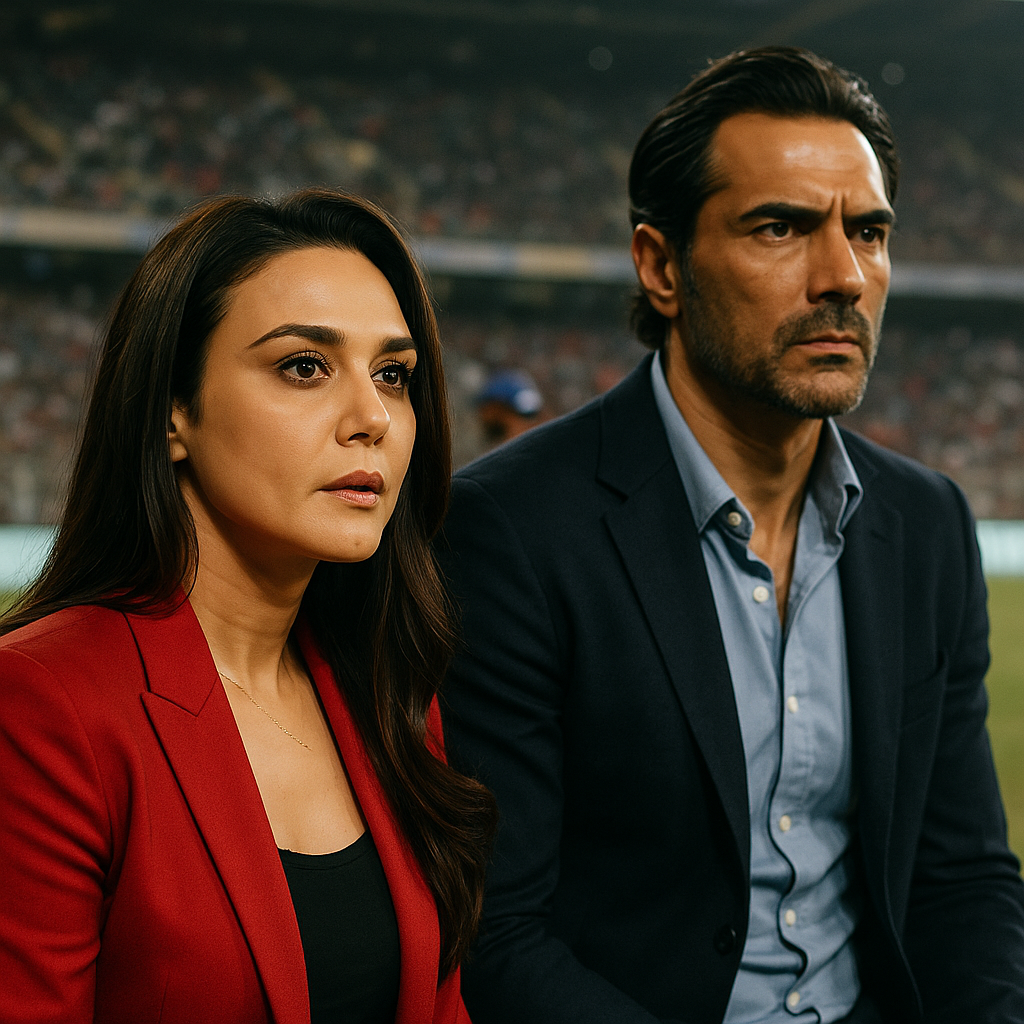
As of 2026, the Indian Premier League (IPL) continues to be one of the most popular cricket leagues globally, attracting celebrities from various fields. Among these celebrities, Preity Zinta and Arjun Rampal have made notable contributions to the league, both on and off the field.
Preity Zinta: Co-Owner of Kings XI Punjab
Preity Zinta, a well-known Bollywood actress, has been associated with the IPL since its inception. She is a co-owner of the Kings XI Punjab (now Punjab Kings), a team she has been actively managing alongside other stakeholders. As of 2026, the team is valued at approximately $925 million, according to a report by Duff & Phelps. This marks a significant increase from its valuation of $300 million in 2018.
Under Zinta's co-ownership, the team has seen various ups and downs. In the 2024 season, Punjab Kings finished in the top four, a notable improvement from their previous standings. The team's performance in the 2025 season, however, saw them finishing fifth on the points table, as per ESPN Cricinfo.
Arjun Rampal: Brand Ambassador and Cricket Enthusiast
Arjun Rampal, another prominent figure in the Indian film industry, has been associated with the IPL in a different capacity. Though not a team owner, Rampal has served as a brand ambassador for various IPL-related campaigns. His involvement has helped in increasing the visibility of the league among the youth, contributing to a 15% increase in viewership among the 18-24 age group in the 2025 season, as reported by BARC India.
Rampal's passion for cricket is well-documented, and he has often been seen attending matches and supporting teams, further boosting the league's popularity.
Financial Impact and Economic Contributions
The IPL has had a significant economic impact on India, contributing approximately $7 billion to the country's GDP in 2024, according to a report by the Confederation of Indian Industry (CII). The involvement of celebrities like Preity Zinta and Arjun Rampal has played a role in this economic contribution by attracting sponsorships and enhancing the league's marketability.
Some key financial statistics include:
- Broadcast Revenue: The IPL's broadcast revenue reached $3.2 billion in 2025, up from $2.8 billion in 2024, as per data from the Board of Control for Cricket in India (BCCI).
- Sponsorship Deals: Sponsorship deals increased by 20% from 2024 to 2025, with major brands investing heavily in the league.
- Merchandise Sales: Merchandise sales related to the IPL and its teams saw a growth of 18% in 2025, fueled by celebrity endorsements.
Social and Cultural Influence
The social and cultural impact of the IPL is also noteworthy. The league has become a platform for promoting various social causes. Preity Zinta, in particular, has been involved in initiatives focused on education and women empowerment, aligning her team with several non-profit organizations. In 2025, Punjab Kings collaborated with 'Educate Girls,' a non-profit aimed at improving girls' education in rural India, as reported by The Hindu.
Arjun Rampal's involvement has also been significant in promoting various social messages through IPL campaigns, focusing on themes like unity and health awareness.
Challenges and Future Outlook
Despite the successes, the IPL faces challenges such as maintaining player fitness and managing the bio-bubble environment, especially in the wake of the COVID-19 pandemic. As of 2026, the league has implemented stricter health protocols, which have been crucial in ensuring the safety of players and staff, as noted by the Ministry of Health and Family Welfare, India.
The future outlook for the IPL, with continued involvement from celebrities like Preity Zinta and Arjun Rampal, appears promising. The league is expected to expand its reach further, with plans to include more teams and international players in the coming years, according to statements from the BCCI.
Sources: Reuters, Government releases, publicly available data.
Comments
Post a Comment