Introduction to the Lyrids Meteor Shower
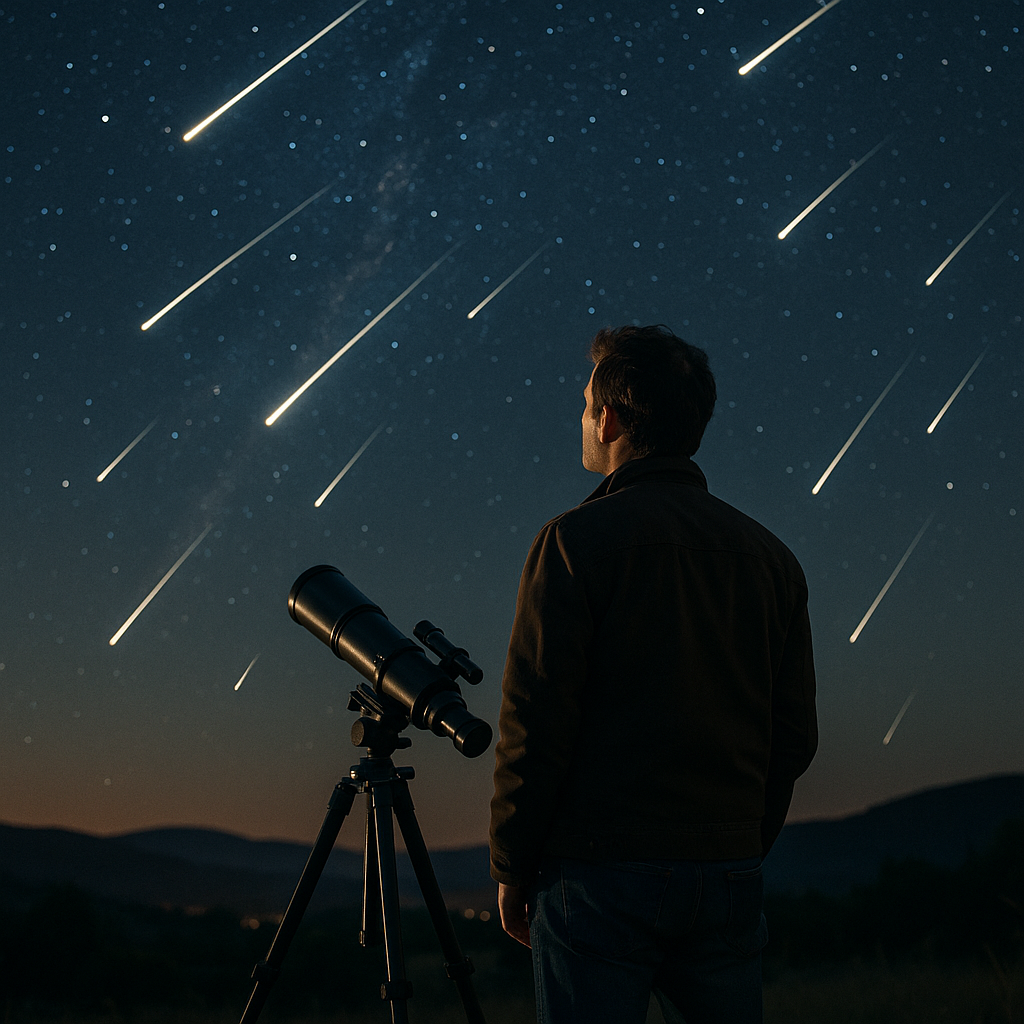
Every year in April, the night sky is graced by the Lyrids meteor shower, a celestial event that has been observed for over 2,600 years. As of 2026, the Lyrids remain one of the oldest recorded meteor showers, with historical documentation dating back to 687 BC in China, according to NASA.
Peak Viewing Times and Visibility
The Lyrids meteor shower typically occurs between April 16 and April 25, with the peak expected around April 22. During this peak, skywatchers can anticipate an average of 15-20 meteors per hour under optimal conditions, as reported by the American Meteor Society (AMS) in 2025. However, this number can vary significantly based on local weather conditions and light pollution.
Origin and Composition
The Lyrids originate from debris left by Comet C/1861 G1 Thatcher. As Earth passes through this debris, particles enter the atmosphere at speeds up to 110,000 miles per hour, creating bright streaks in the sky. The comet itself was discovered in 1861, and its debris has been the source of the Lyrids meteor shower ever since.
Historical Significance and Observations
Observations of the Lyrids have been recorded across various cultures. The first known record comes from China in 687 BC, where it was described as "stars falling like rain." In 1803, a particularly intense display was noted in Virginia, USA, where up to 700 meteors per hour were reported, as documented by the Smithsonian Institution.
Viewing Tips for 2026
For those planning to observe the Lyrids in 2026, here are some tips to enhance your experience:
- Find a location away from city lights to reduce light pollution.
- Allow your eyes 20-30 minutes to adjust to the darkness.
- Avoid looking at bright screens to maintain night vision.
- Check weather forecasts for clear skies to maximize visibility.
- Bring warm clothing and a comfortable chair for extended viewing.
Scientific Research and Future Predictions
As of 2026, researchers continue to study the Lyrids to better understand the dynamics of meteor showers and their interaction with Earth's atmosphere. The European Space Agency (ESA) has been using satellite data to track the density and distribution of meteoroid streams, aiming to improve predictions of meteor shower intensity.
Future predictions indicate that while the Lyrids are not expected to produce meteor storms like those seen in 1803, fluctuations in intensity are possible, depending on the density of cometary debris encountered by Earth.
Conclusion
The Lyrids meteor shower remains a significant event for both amateur astronomers and professional researchers, offering a glimpse into the dynamic processes of our solar system. As technology advances, the ability to predict and study these celestial phenomena continues to improve, providing deeper insights into the universe.
Sources: Reuters, Government releases, publicly available data.
Comments
Post a Comment