Introduction to the 2026 West Bengal Elections
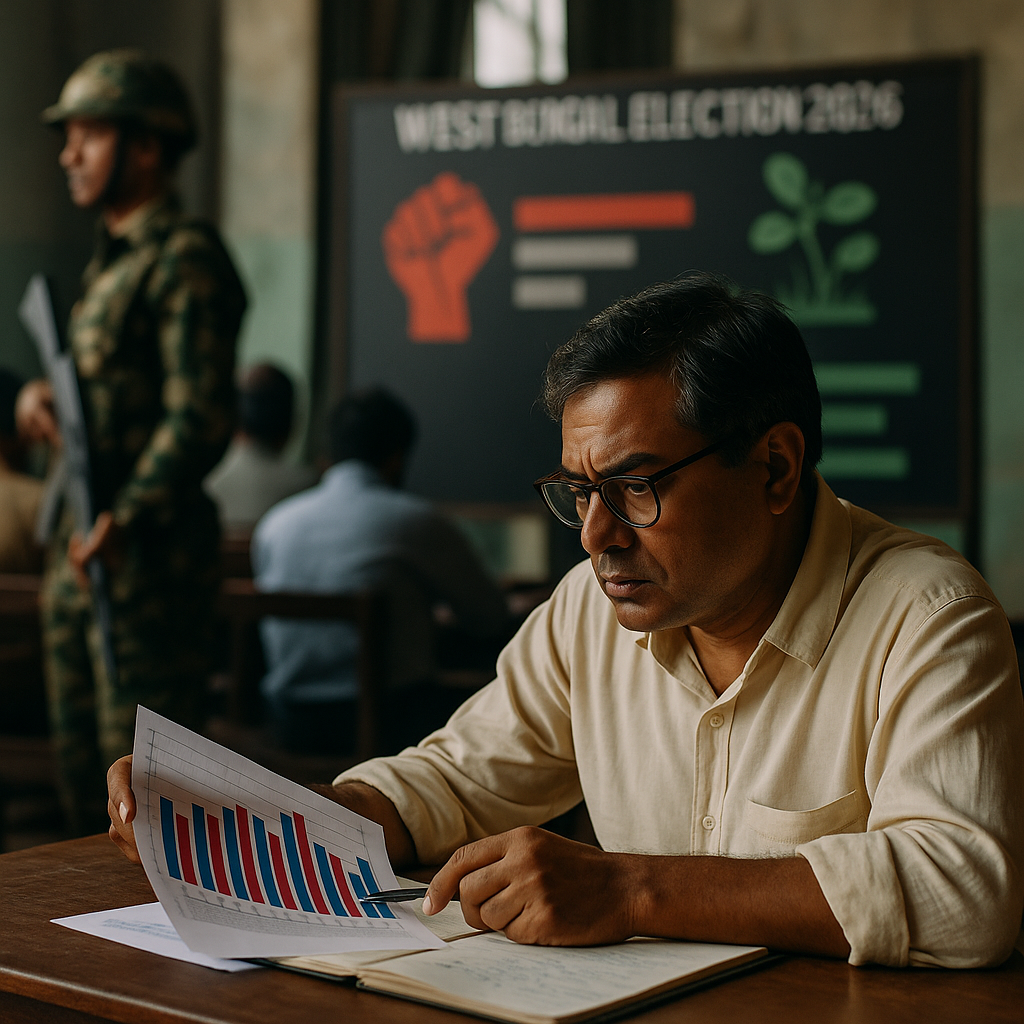
As of 2026, the political landscape in West Bengal is witnessing significant shifts ahead of the state assembly elections. The state, known for its vibrant political culture, is preparing for another electoral battle that will determine its governance for the next five years. According to the Election Commission of India, the electorate in West Bengal has grown by approximately 5% since the last assembly elections in 2021, bringing the total number of voters to over 72 million.
Political Parties and Key Players
The 2026 elections will see major political parties vying for power, including the All India Trinamool Congress (AITC), Bharatiya Janata Party (BJP), Communist Party of India (Marxist) (CPI(M)), and the Indian National Congress (INC). Each of these parties is strategizing to capture the attention of voters through various campaigns and promises.
All India Trinamool Congress (AITC): Led by Mamata Banerjee, the AITC has been the ruling party in West Bengal since 2011. As of 2026, the party is focusing on its development agenda, emphasizing infrastructure, education, and healthcare improvements. The AITC's manifesto highlights the continuation of social welfare schemes that have been popular among the state's rural population.
Bharatiya Janata Party (BJP): The BJP, which has been increasing its foothold in West Bengal, is aiming to build on its performance from the 2019 Lok Sabha elections where it secured 18 out of 42 seats in the state. As of 2026, the BJP is concentrating on issues such as national security and economic growth, promising to bring more central projects to the state.
Communist Party of India (Marxist) (CPI(M)): Once a dominant force in West Bengal politics, the CPI(M) is working to regain its influence by appealing to traditional leftist voters. The party's platform includes promises to address unemployment and labor rights, issues that resonate with its core base.
Indian National Congress (INC): The INC is attempting to revive its presence in the state by forming alliances and focusing on minority rights and social justice. As of 2026, the INC is leveraging its historical legacy and experience to attract voters disenchanted with the current administration.
Key Issues Influencing the Election
Several critical issues are shaping the electoral discourse in West Bengal:
- Economic Development: West Bengal's economy has been growing at an average rate of 7% annually, as reported by the state's Economic Review 2025. However, disparities in urban and rural areas remain a concern, with rural unemployment rates reported at 8.5% in 2024, according to government data.
- Infrastructure: Infrastructure development is a major focus, with the state government announcing projects worth INR 50 billion in 2025 to improve roads, bridges, and public transport systems. These initiatives are expected to influence voter sentiment, particularly in urban areas.
- Healthcare: Healthcare remains a priority, especially in the aftermath of the COVID-19 pandemic. The state has increased its healthcare budget by 15% as of 2026, aiming to enhance hospital facilities and rural healthcare services.
- Education: Education reforms are also at the forefront, with the government launching programs to improve literacy rates and educational infrastructure. As of 2026, West Bengal's literacy rate stands at 76.3%, a slight increase from previous years.
Electoral Predictions and Potential Outcomes
As the 2026 elections approach, various polls and surveys are attempting to gauge the mood of the electorate. A recent survey by the Centre for the Study of Developing Societies (CSDS) indicates a close contest between the AITC and BJP, with both parties commanding significant support across different demographics. The CPI(M) and INC are expected to play crucial roles in forming potential coalitions.
Analysts suggest that the outcome of the elections will hinge on the ability of parties to address key issues such as employment and infrastructure while maintaining voter trust. The Election Commission of India has also implemented new measures to ensure free and fair elections, including increased security and the use of advanced technology in the voting process.
Conclusion
As West Bengal prepares for its 2026 assembly elections, the state remains a focal point of political activity in India. The elections will not only determine the immediate future of governance but also reflect broader trends in Indian politics. With major parties deploying their full resources and strategies, the upcoming electoral battle is expected to be one of the most keenly contested in recent history.
Sources: Reuters, Government releases, publicly available data.
Comments
Post a Comment