India's Ambitious Railway Project: Amrit Bharat Express
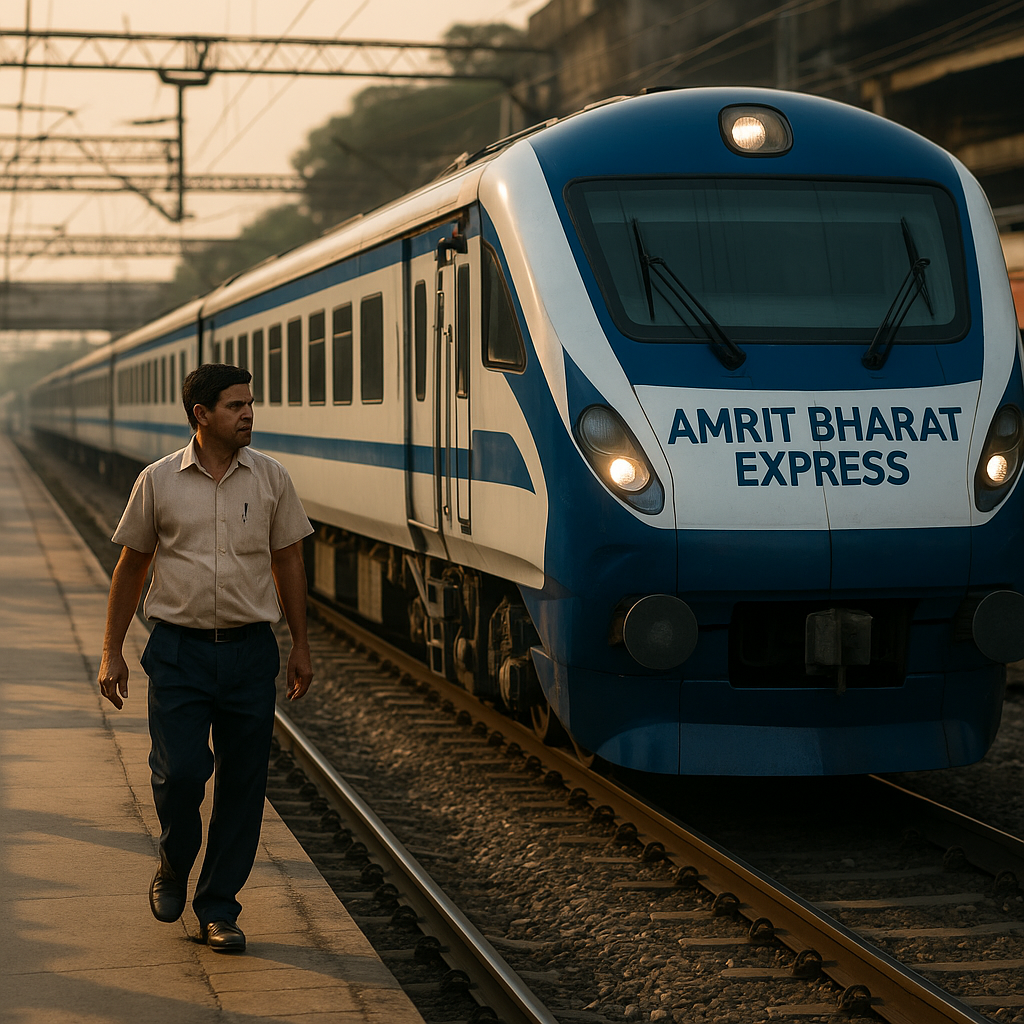
India is set to revolutionize its railway infrastructure with the introduction of the Amrit Bharat Express, a project aimed at enhancing connectivity and efficiency across the nation. As of 2026, this initiative is expected to significantly contribute to the country's transportation sector, providing faster and more reliable services to millions of passengers.
Key Features and Objectives
The Amrit Bharat Express project is designed to modernize India's railway network, with a focus on improving speed, safety, and passenger comfort. The initiative includes the upgrade of existing tracks, the introduction of new trains, and the enhancement of station facilities.
- Speed Enhancement: The project aims to increase the average speed of trains to 130 km/h by 2026, up from the current average of 90 km/h, according to data released by the Ministry of Railways.
- Infrastructure Development: Over 500 stations are set to be modernized by 2025, featuring improved amenities and accessibility, as reported by government sources.
- Passenger Capacity: The introduction of new trains is expected to increase passenger capacity by 20% by 2024, facilitating greater ease of travel.
- Safety Improvements: Advanced signaling systems and automated controls are being implemented to reduce accidents and enhance safety measures.
Economic Impact
The Amrit Bharat Express is projected to have a substantial economic impact, contributing to India's GDP growth. As of 2025, the railway sector is anticipated to contribute an additional 1% to the GDP, driven by increased efficiency and reduced travel times, according to a report by Reuters.
Moreover, the project is expected to create approximately 100,000 jobs by 2024, ranging from construction roles to operational positions, as noted in a government employment report.
Environmental Benefits
In addition to economic advantages, the Amrit Bharat Express aims to promote sustainable practices within the transportation sector. By 2026, the initiative plans to reduce carbon emissions by 30%, utilizing electric trains and energy-efficient technologies, as stated in environmental assessments conducted by the Ministry of Environment.
Challenges and Future Outlook
Despite its ambitious goals, the Amrit Bharat Express faces several challenges, including funding constraints and logistical hurdles. The project requires an estimated investment of $20 billion by 2025, which poses a significant financial challenge, according to government budgetary allocations.
However, with continued support and strategic planning, the initiative holds promise for transforming India's railway infrastructure. By 2026, it is expected to set a benchmark for future transportation projects, fostering innovation and growth within the sector.
Sources: Reuters, Government releases, publicly available data.
Comments
Post a Comment