
The Illusion of Security in AI Detection
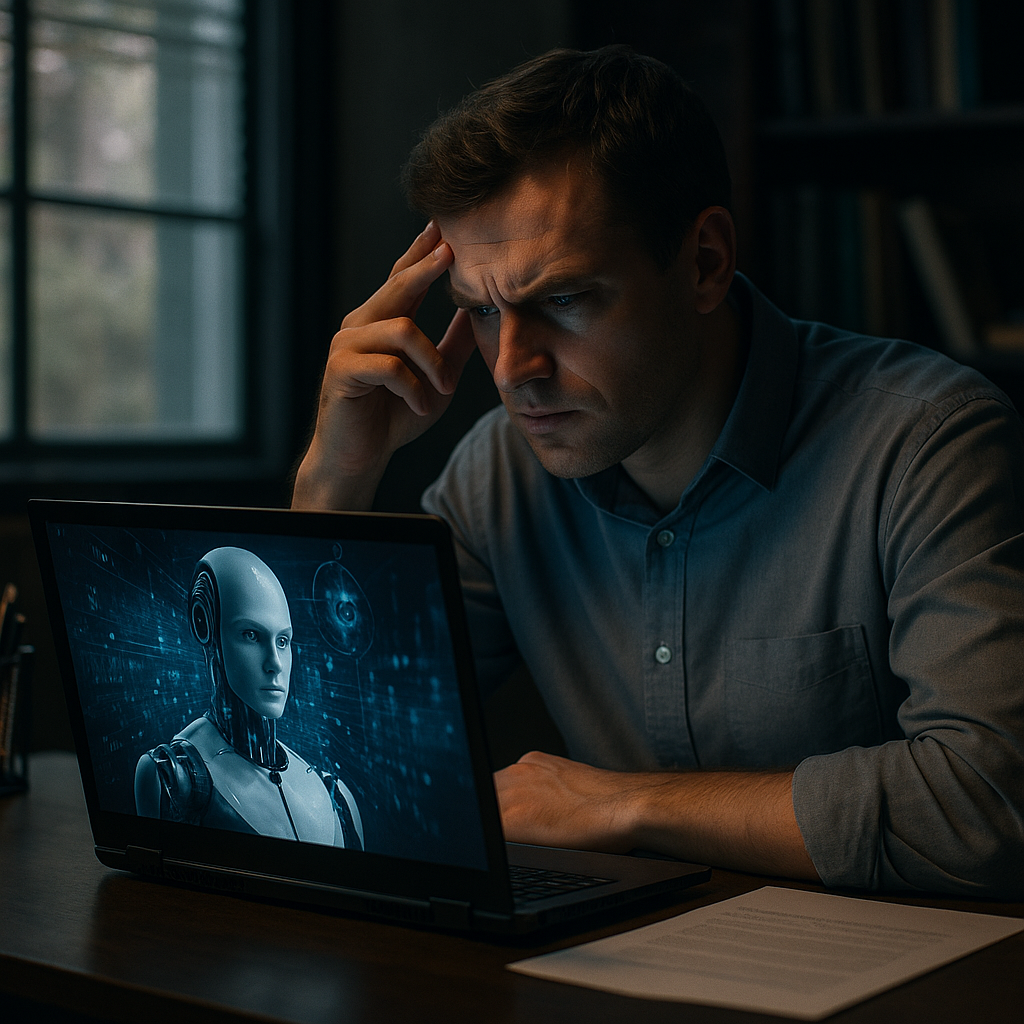
In a world that’s increasingly obsessed with authenticity, the rise of AI detectors has been nothing short of meteoric. Yet, here's a controversial twist: most people trust these detectors blindly, assuming they're infallible guardians against the deceit of artificial intelligence, while ignoring their glaring limitations. The fact of the matter is, AI detectors, despite their promise, are still stumbling around like toddlers trying to understand the adult world of AI-generated content.
The Numbers Don't Lie... Or Do They?
Let's throw some numbers at you. In 2022 alone, AI detectors claimed they could achieve an accuracy rate of up to 85% when tasked with identifying AI-generated text. But hold your applause; the actual effectiveness in real-world scenarios often dips below 70%. Why? Because AI models, like OpenAI's GPT-3, are evolving at breakneck speeds, outpacing the very detectors meant to police them.
Furthermore, a survey conducted in March 2023 revealed that 68% of content creators were more concerned about false positives from AI detectors than the AI content itself. Imagine trying to prove the innocence of your original work, only to be red-flagged by a technology supposedly designed to protect you.
The Human Element: A Missing Link
What many fail to realize is that AI detectors are not just technical systems; they are deeply intertwined with human biases and imperfections. Just 18 months ago, a major educational platform implemented AI detectors to weed out plagiarism, only to face backlash from students whose genuine papers were inaccurately flagged. These detectors, relying heavily on algorithms that lack human nuance, can misinterpret creativity as deceit.
When AI Detectors Fall Short
- Over-reliance on statistical patterns: AI detectors primarily focus on statistical anomalies rather than the semantic meaning of text.
- Rapid AI evolution: Newer AI models generate content that detectors haven't been trained to recognize.
- Human-AI collaboration: As creators use AI tools, distinguishing human touch from AI output becomes murkier.
And here's the kicker: even the most advanced AI detectors can struggle to differentiate between a well-written article by a human and AI-generated content that’s been polished to perfection with just a few manual tweaks.
Peering Into the Future: Solving the Puzzle
What then is the solution? A hybrid approach where AI detection systems are complemented by human review might be the answer. Envision a world where AI detectors serve as an initial line of defense, flagging potential anomalies, while human moderators bring their nuanced understanding to the fore, ensuring technology doesn't stifle creativity. March 2023 saw the initial trials of such systems in digital publishing platforms, and guess what? Early results are promising!
The Bottom Line: A Reality Check
In a digital age fraught with impersonation and illusion, relying solely on AI detectors is akin to believing your car's autopilot feature will navigate a storm without human intervention. While AI detectors offer a glimmer of hope, they're not the panacea for authenticity concerns. The real challenge lies in striking the delicate balance between technological reliance and human intuition.


0 Comments